FLOODWARN.CO.UK

FLOODWARN SEVERE WEATHER AND FLOODING

FLOODING WARNINGS & ADVICE


Eruption disruptionKatla volcano Clipart

Iceland Volcano information and drifting ash cloud

Monitoring the Katla Volcano

Floodwarn has oportunities for low cost advertising or sponsor

Floodwarn is provided completely free but the costs of running and hosting this site are not free.

It is really appreciated that some users donate towards the running of the site and we have added a donate button to make this easier.

If you can not donate please atleast click our + button it helps keep our site FREE for you


Live Webcams of Katla volcano and latest on the katla volcano

Bookmark Floodwarn to use again

Share/Bookmark
World Recent Earthquake Map
Legend for earthquake map


This Site is to be used for information only.

The data on this site is provided for purpose of information only and is not intended for any other reason, including but not limited to flood forecasting, flood prevention or predicting actual weather severity. It is up to you the user to decide if you need to take action and what action if any to take. Floodwarn shall not be liable for any errors, inaccuracies,misrepresentations, delay in the content, or for any action taken or not taken in reliance thereon. The FloodWarn site contains information that may or may not be accurate.

Please use the UK GOVERNMENT sites for reliable information.

Floodwarn accept your use of this site under these terms only.


Katla volcano Iceland
    • LIVE ....web cams of the Iceland Volcano live information on the ash cloud and plume. links to monitor the volcano
    • Katla Volcano about to erupt - according to some news media - NOT TRUE There is no more signs that Katla is about to erupt than last few months. Infact seismic activity appears to be very low at this time. For truth on Volcanic activity at Katla please use Floodwarn, Iceland Met Office or Jon Frimmann Blog


    Back to main volcano page click here

    To Worldwide volcano webcam page click here

    Hierro volcano webcams click here


    You may be asked to let an add on access your computer this is normal for windows media player to access the web cam

    This is normal

    We have no control over the web cams directly and just provide a convenient viewing platform ( ie side by side cams) for users to view this awesome spectacle provided by nature.

    The cams are positioned in very remote areas and currently in the areas there are power outages that cause the cameras to go offline.

    In addition some cameras are positioned in no go areas with the current eruption and so a failure can not be repaired.


    Below is the Hekla Volcano webcam

    Hekla is the most active volcano in Iceland and often referred to as the Queen of Iceland´s volcanoes.

    Hekla last erupted in February of 2000. Scientists believe that Hekla is likely to erupt soon and if that happens – you will be able to watch it happen live on the Hekla web cam – right here on floodwarn!


    If this Katla webcam is not working try the Live Mila Katla webcam fiurther down page

    Latest information

    05/10/2011 Katla has had numerous earthquakes since the early hours of this morning, this swarm of quakes have been nearer the surface and have been intense with 4.1 registered on the scale.

    This indicates that something is happening with Magma moving towards the surface.

    Iceland met report no eruption at this time.

    Floodwarn believe some form of eruption is likely in the next few days and possibly within hours.

    The webcam on Katla has not been working for last 24 hours, we hope it gets fixed soon, this is not to do with any eruption but more likely technical or weather related fault

    Iceland's massive volcano Katla appears on the brink of a major eruption just days after officials confirmed they had detected the start of eruptions over the summer.

    Measuring devices this morning have picked up a large earthquake swarm, usually a tell-tale sign of a potential volcanic eruption.

    The Icelandic Government last month announced it was increasing monitoring Katla,

    which is one of Europe's most feared volcanoes, following a consistent and strengthening spike of tremors and quakes.

    And last week, officials at the Iceland Meteorological Office confirmed a series of smaller eruptions had occurred in July strengthening fears of an imminent, much larger, eruption.

    Evidence gathered by geophysicists showed the magma had risen to the height of the glacier ice above the volcano causing it to melt.
    It is believed Katla, named after a vindictive troll of Viking folklore, has the potential to be much stronger and disruptive than the last two Icelandic volcanic eruptions that caused chaos across Europe's air space, grounding flights and closing airports.

    Katla is much larger than its neighbouring Eyjafjallajokull – which erupted last year (2010) - with a magma chamber about 10 times the size.

    Volcanologists warn that if Katla does erupt, and its a major eruption then the combination of the magma and the large ice sheet covering the volcano could lead to explosive activity and an ash plume for weeks, if not months.

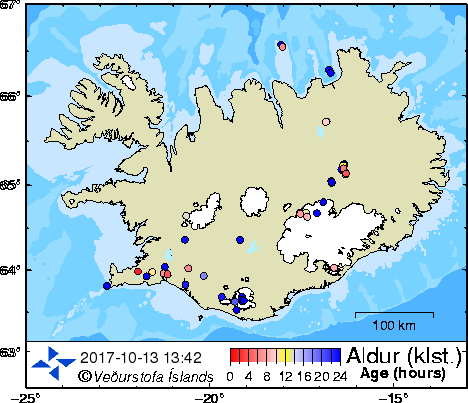
    Latest Earthquakes in Iceland (Volano seismic activity)

    Locations of earthquakes in Iceland for the last 48 hours. The image is refreshed every 2 minutes. The circles on the map represent earthquakes for the last 48 hours. The colors of the circles represent the time since the earthquakes occured (the numbers below the color palette show hours). The latest earthquakes are shown in red and the darkblue ones are 24 hours old or more. The earthquakes stay blue until they are 48 hours old, then they disappear. Earthquakes bigger than M3 (on Richtersscale) are represented with green stars. Black triangles represent seismic stations (the SIL system) and brown lines show roads.

     katla volcano live


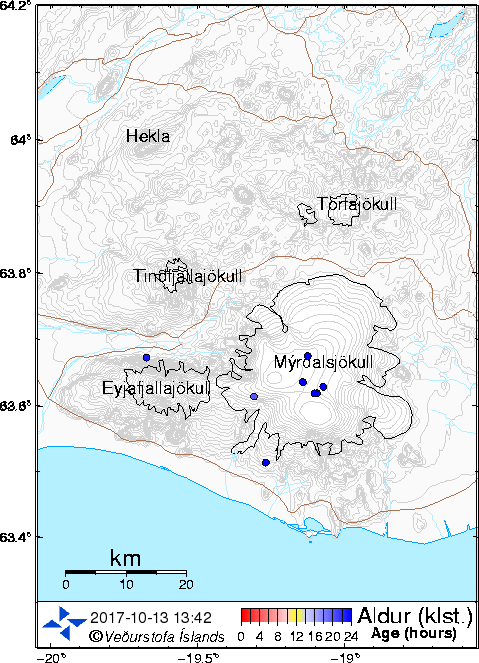
    Latest Earthquakes at Katla Volcano

     katla volcano live


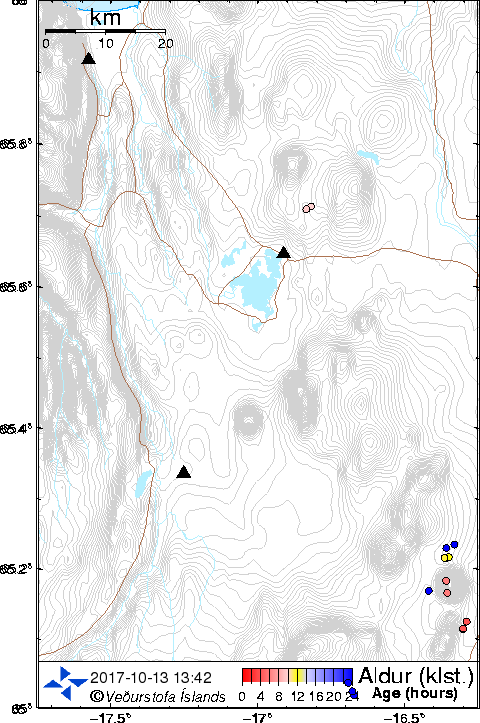
    Latest Earthquakes at Mývatn Volcano

     katla volcano live


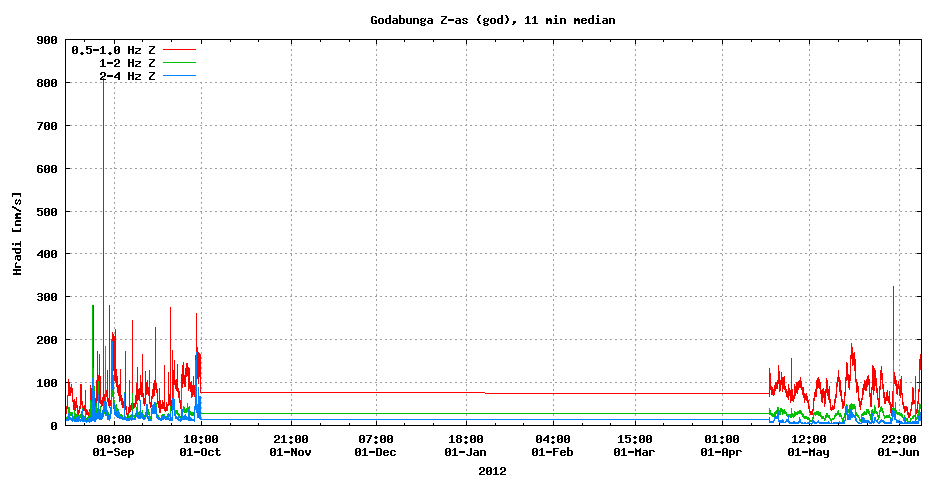
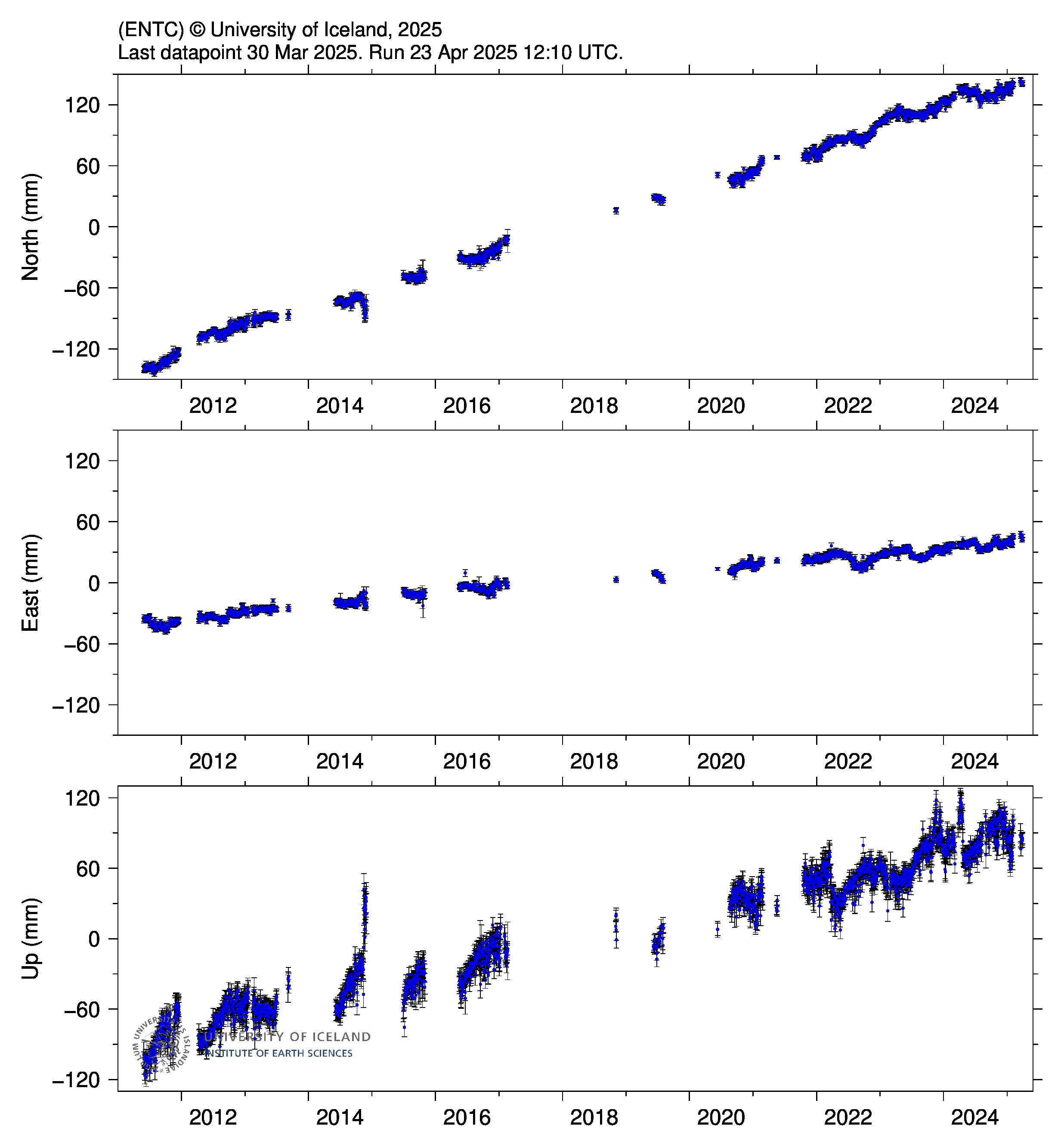
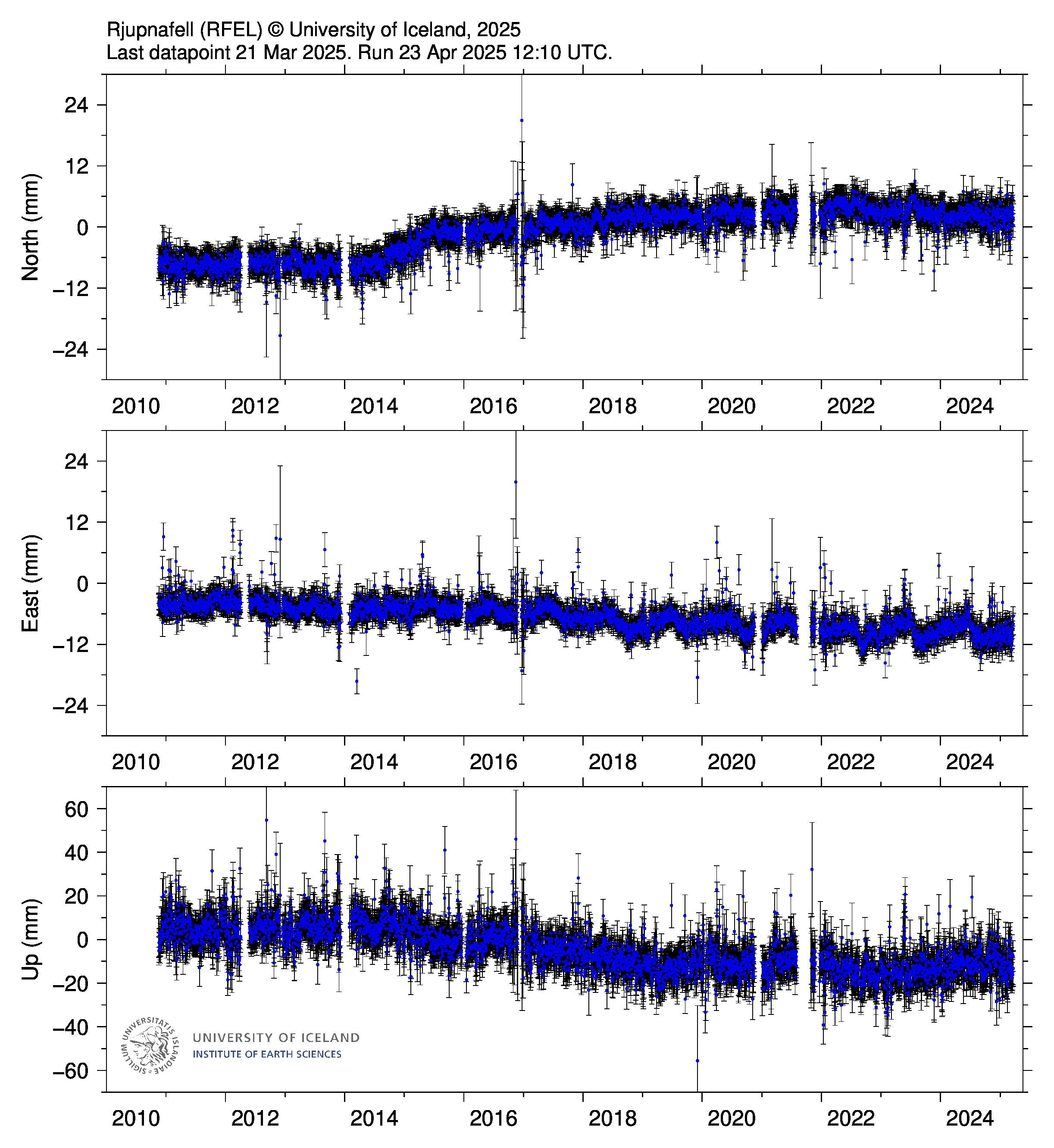
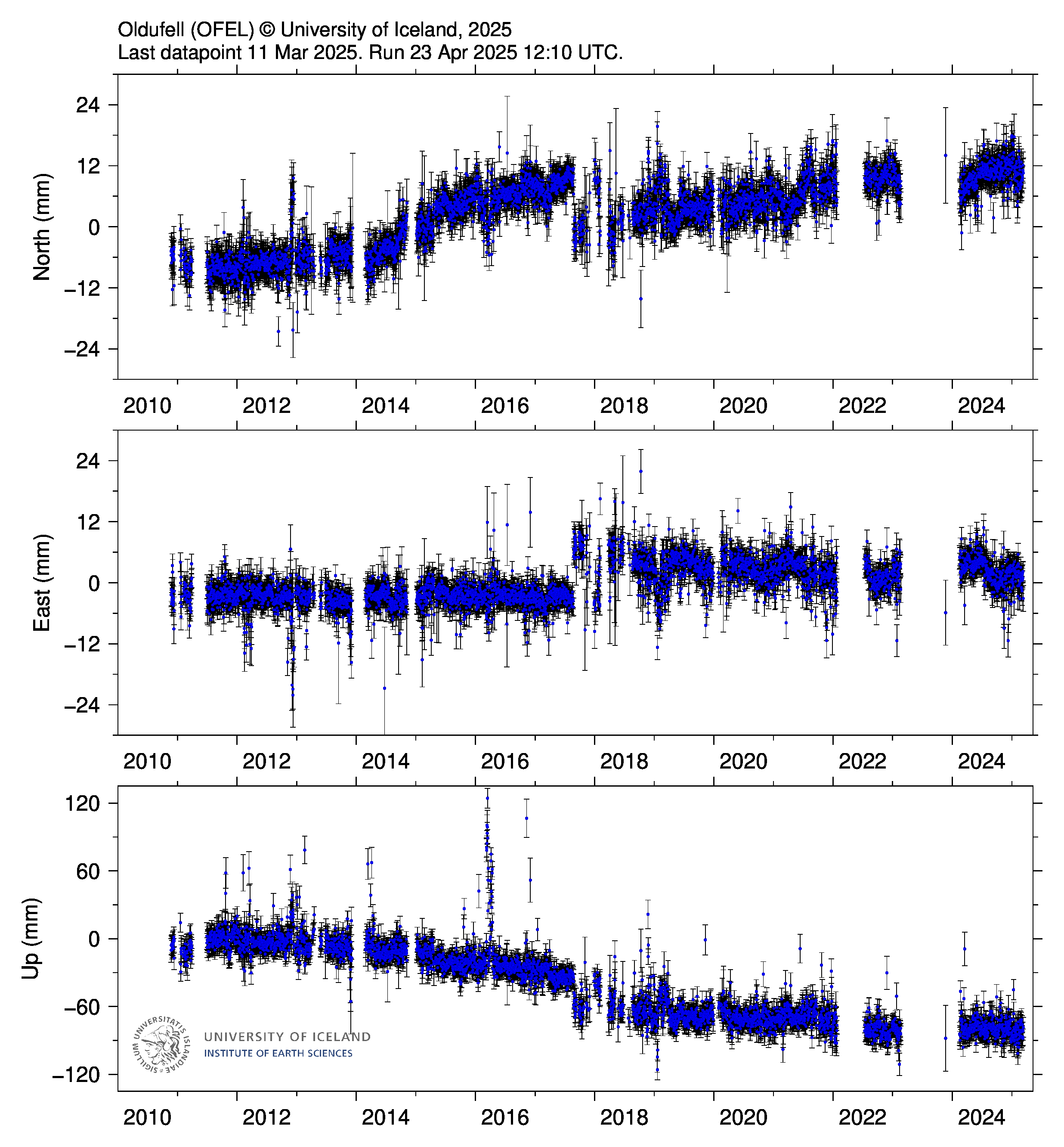
    Katla Volcano live seismic activity HVO harmonic tremor plot

    Copyright of this picture belongs to Iceland Met Office

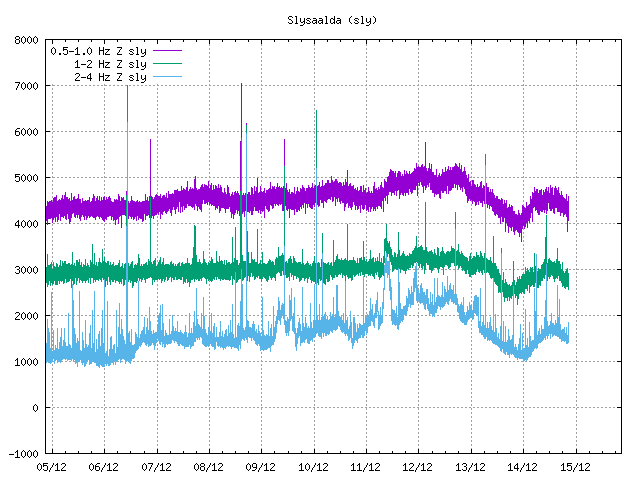
    Katla Volcano live seismic activity SLY

    Katla Volcano live seismic activity Sil (Slysaalda) harmonic tremor plot

    Copyright of this picture belongs to Iceland Met Office

    Katla Volcano live seismic activity

    Katla Volcano live seismic activity tremor plot

    Copyright of this picture belongs to Jon Frimann

    Webcam image of Katla showing where Katla is for cam below it

    Webcam image map of Katla volcano

    Katla Volcano live seismic activity


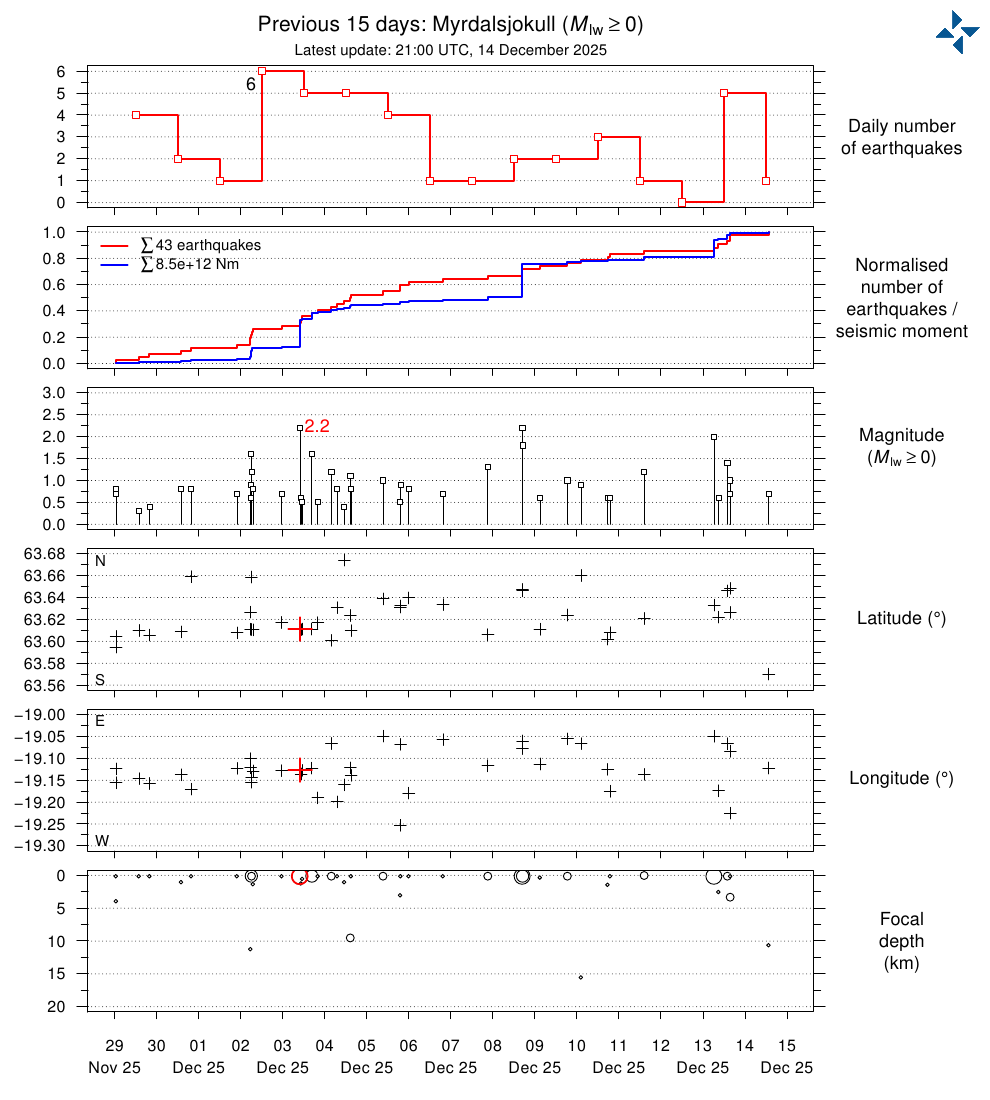
    Katla Volcano 15 day seismic activity


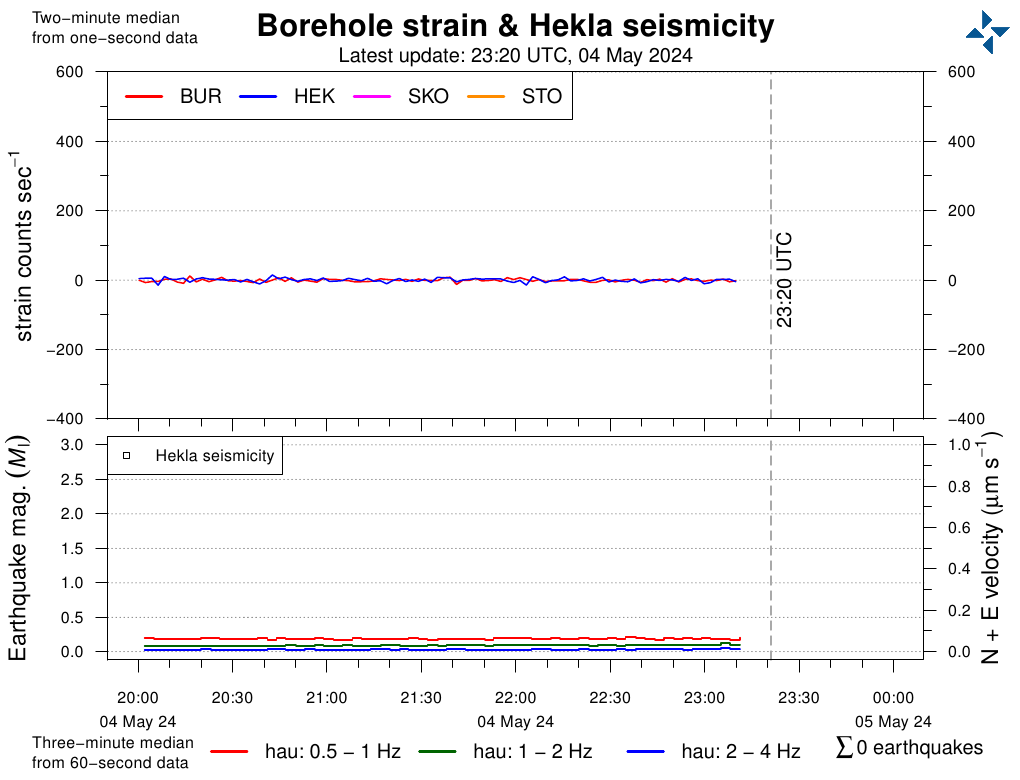
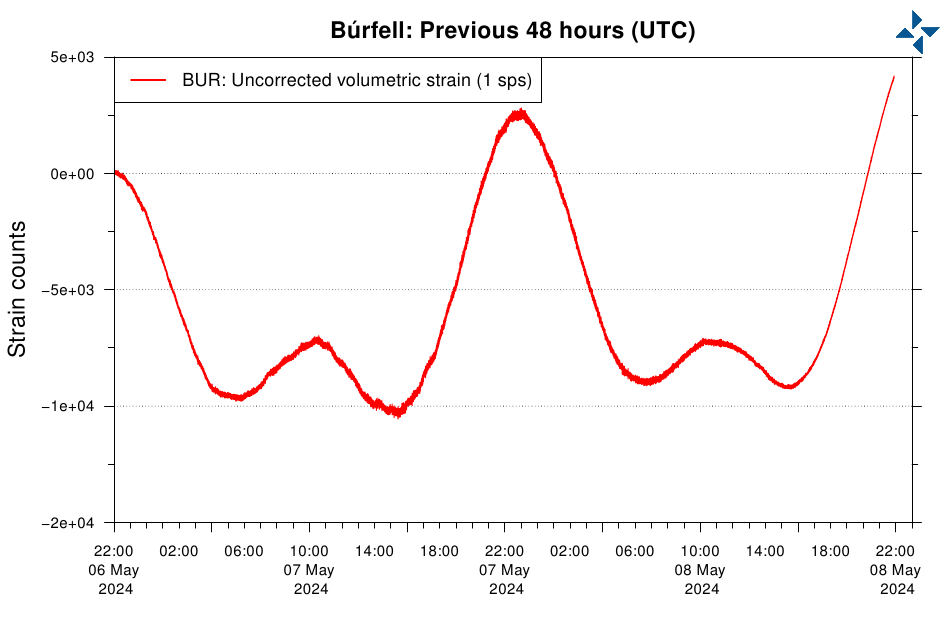
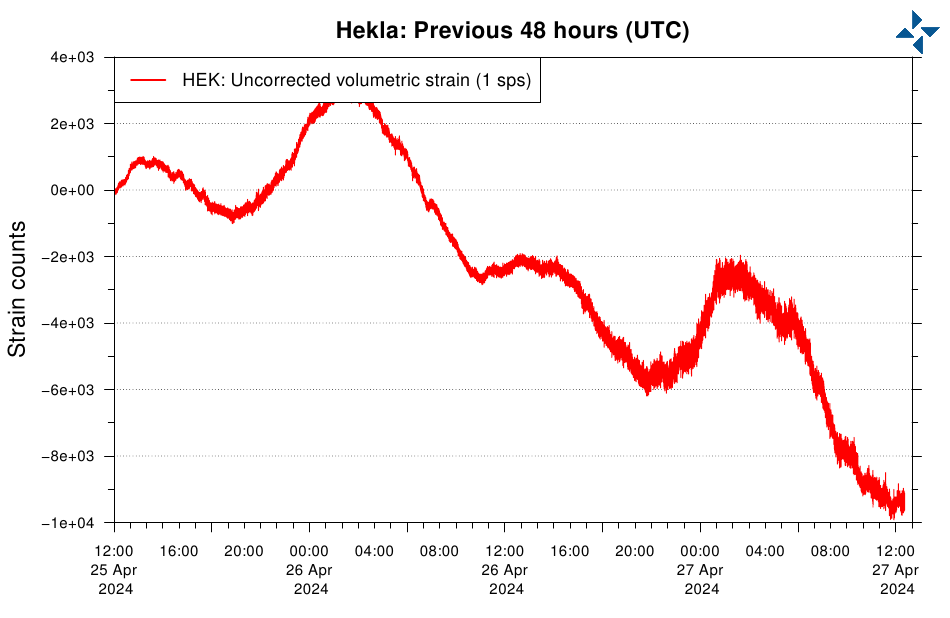
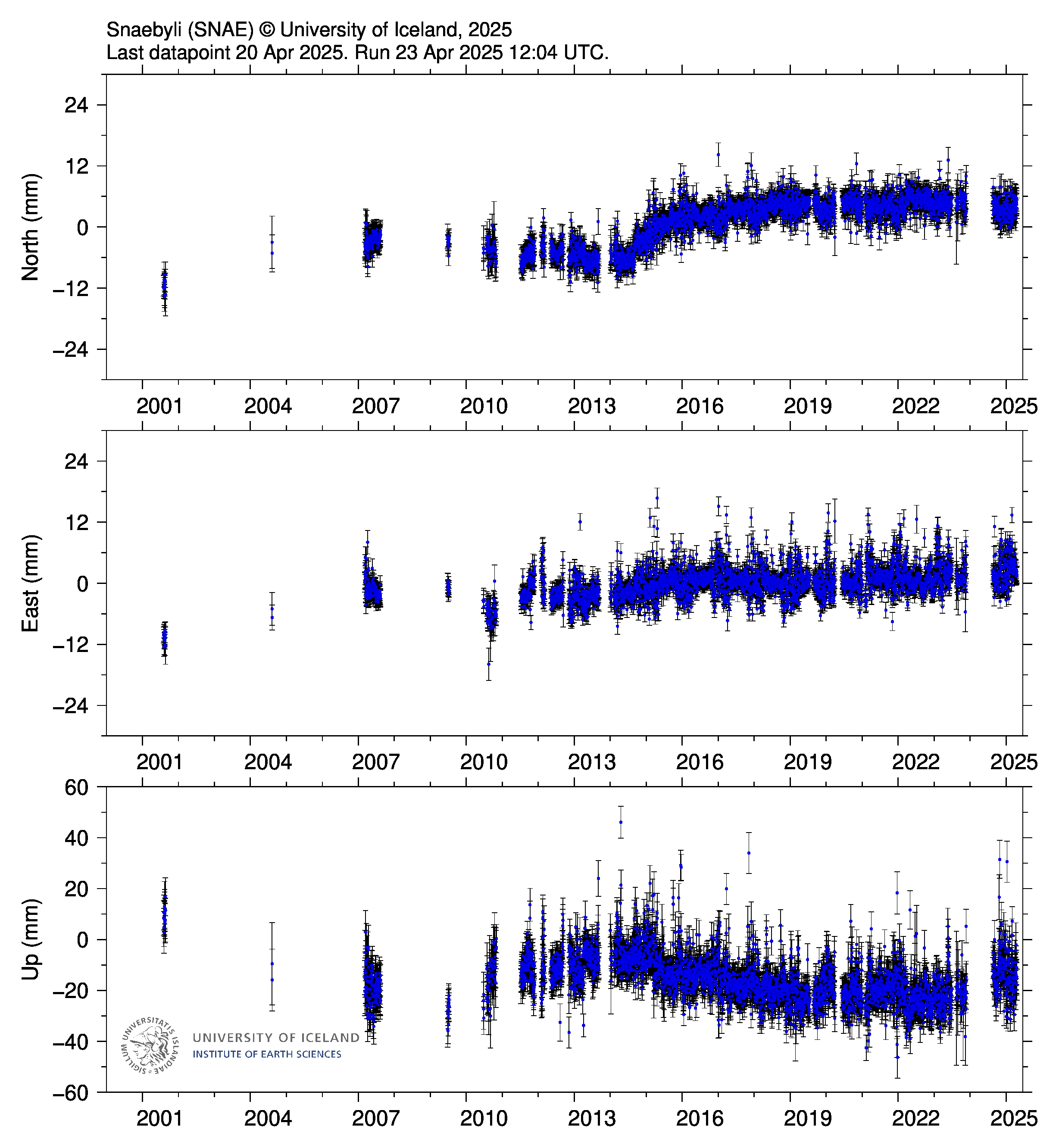
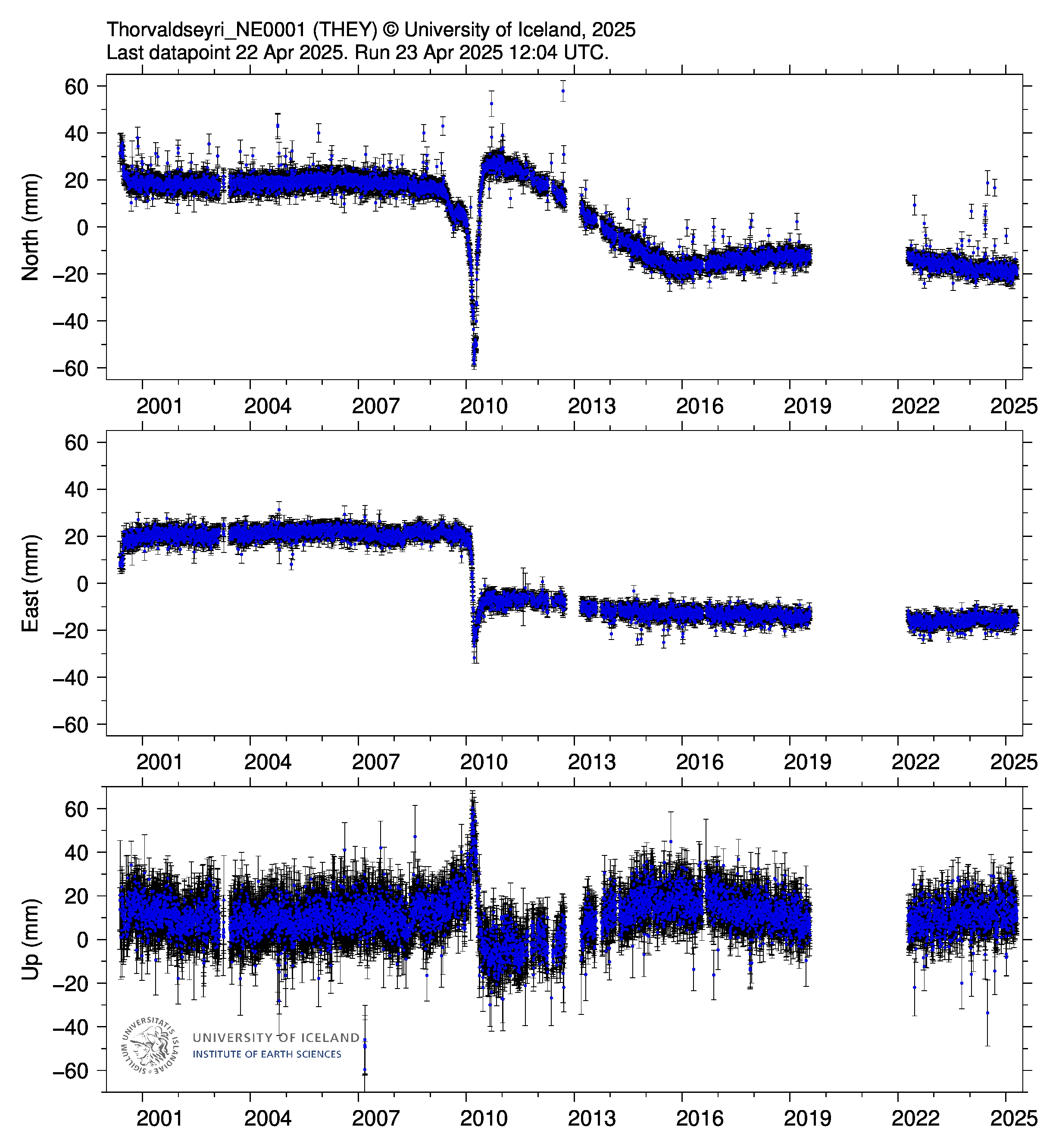
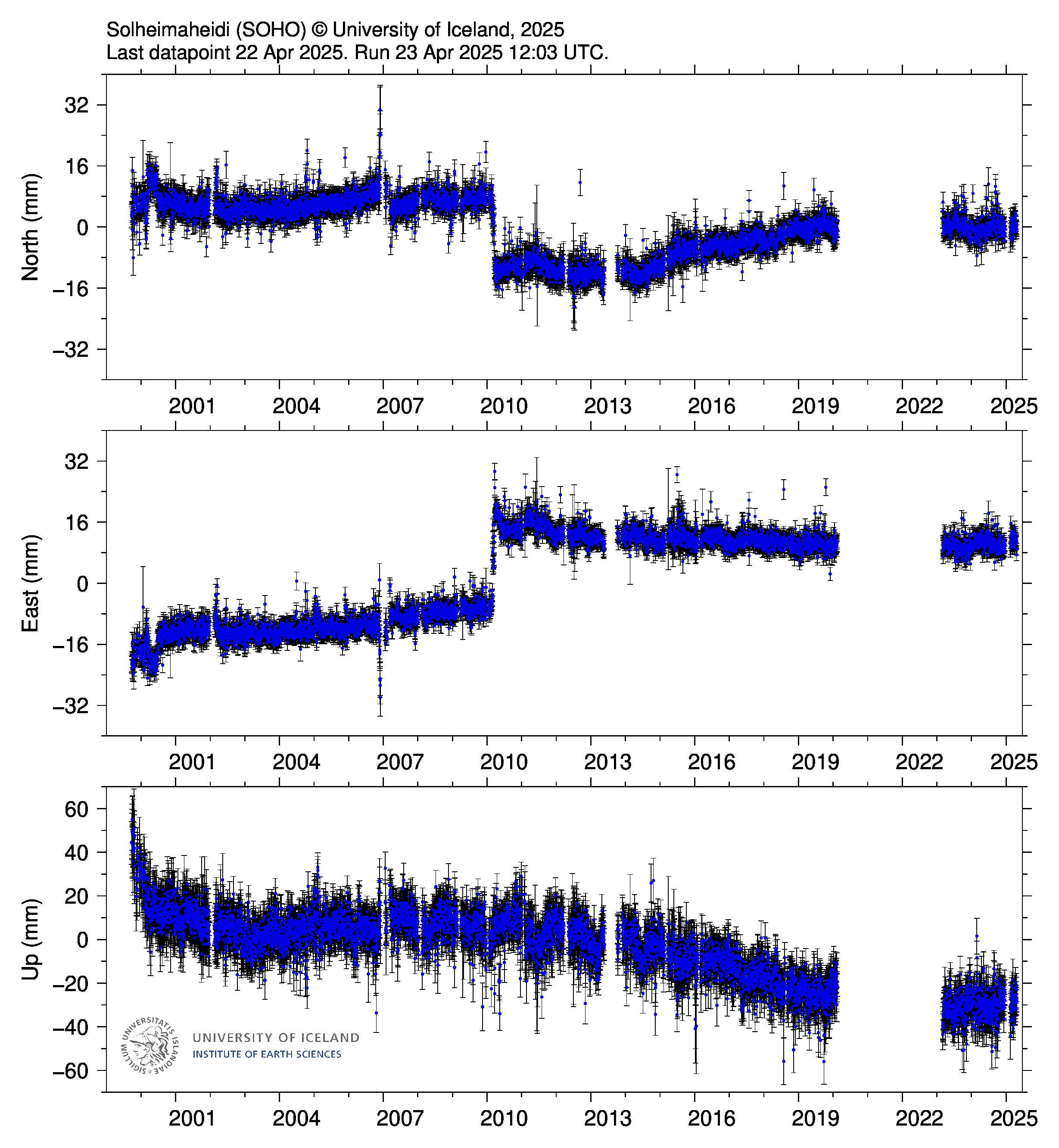
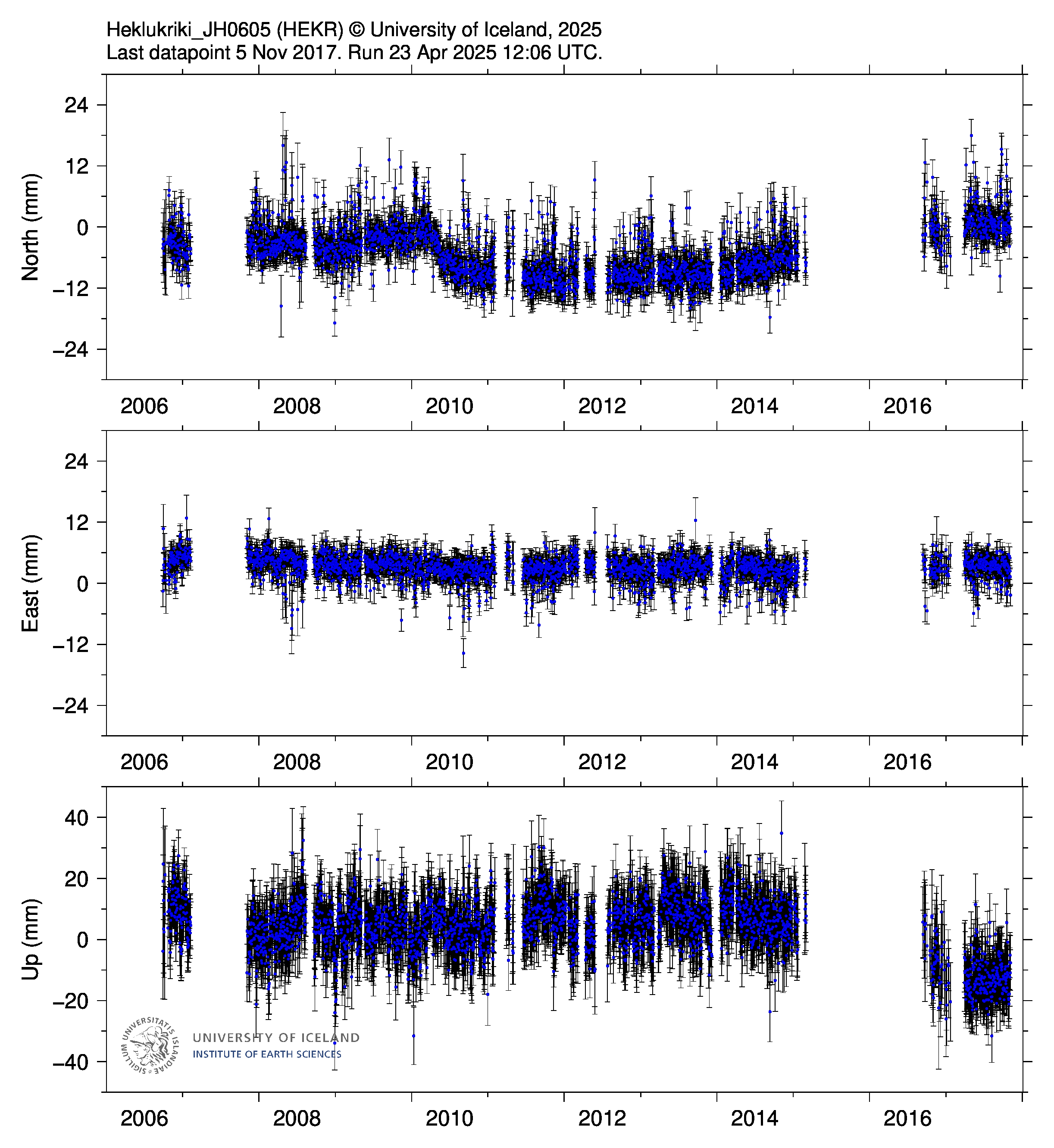
    Hekla Borehole Strain & Seismicity


        Strainmeters

        Strainmeters are used to measure the stress on a particular part of the Earth's crust, usually a fault. Strain meters work by measuring movement between two distant points.

        For example, if the distance between two points located one kilometer apart changes by one millimeter, the resulting strain is considered to be one microstrain.

        Strainmeters generally measure changes from positions in boreholes in the Earth's surface.


    Hekla strain & seismic activity

    Hekla strain & seismic activity

    Hekla strain & seismic activity

    Hekla strain & seismic activity


    Katla Web Cam


    Below is latest Hekla Web cams

    First cam image is huge, use scrolling to view


    Below is another Hekla volcano Web cam


    Akureyri Web Cam

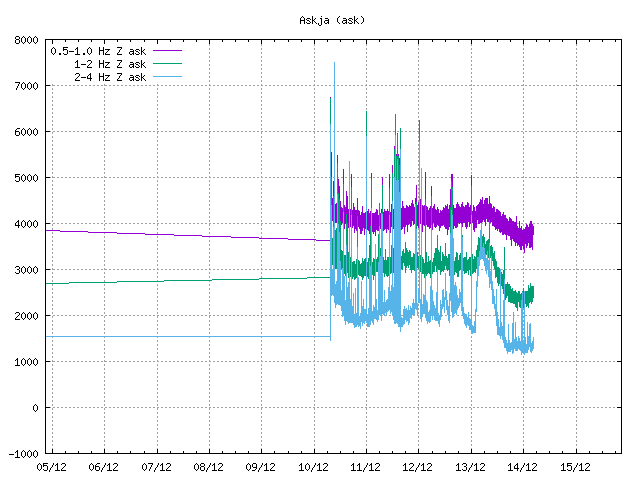
    Katla Volcano live seismic activity ASK


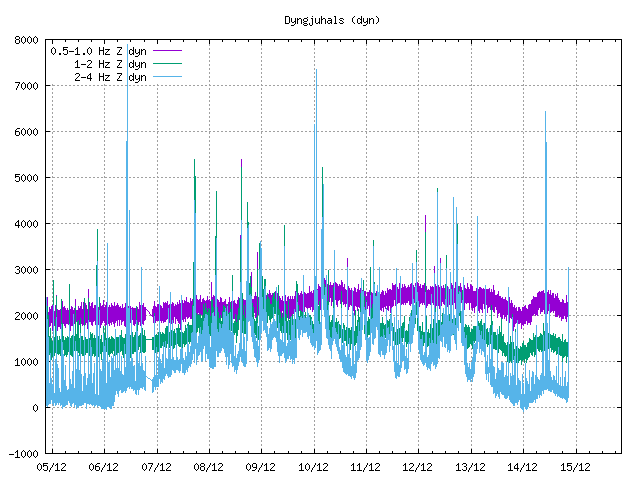
    Katla Volcano live seismic activity DYN


    Katla Volcano live seismic activity HVO


    Links

    Solar activity & volcano earthquake link

    Volcano plume forecast data

    Aircraft radar in UK airspace

    Seismic activity charts iceland

    The charts to take notice of are the "esk" for Eyjafjallajökull and "hvo" for katla although some seismic activity will be shown in all Live EARTHQUAKE info


The “Ring of Fire” also called the Circum-Pacific belt, is the zone of earthquakes surrounding the Pacific Ocean — about 90% of the world’s earthquakes occur there. The next most seismic region (5-6% of earthquakes) is the Alpide belt (extends from Mediterranean region, eastward through Turkey, Iran, and northern India.

The greatest mountain range is the Mid-Ocean Ridge, extending 64,374 km (40,000 mi) from the Arctic Ocean to the Atlantic Ocean, around Africa, Asia, and Australia, and under the Pacific Ocean to the west coast of North America. It has a greatest height of 4207m (13,800 ft) above the base ocean depth.

Subduction is the process of the oceanic lithosphere colliding with and descending beneath the continental lithosphere.